

Find a Job
Finite Element Analysis

Finite Element Analysis

Overview

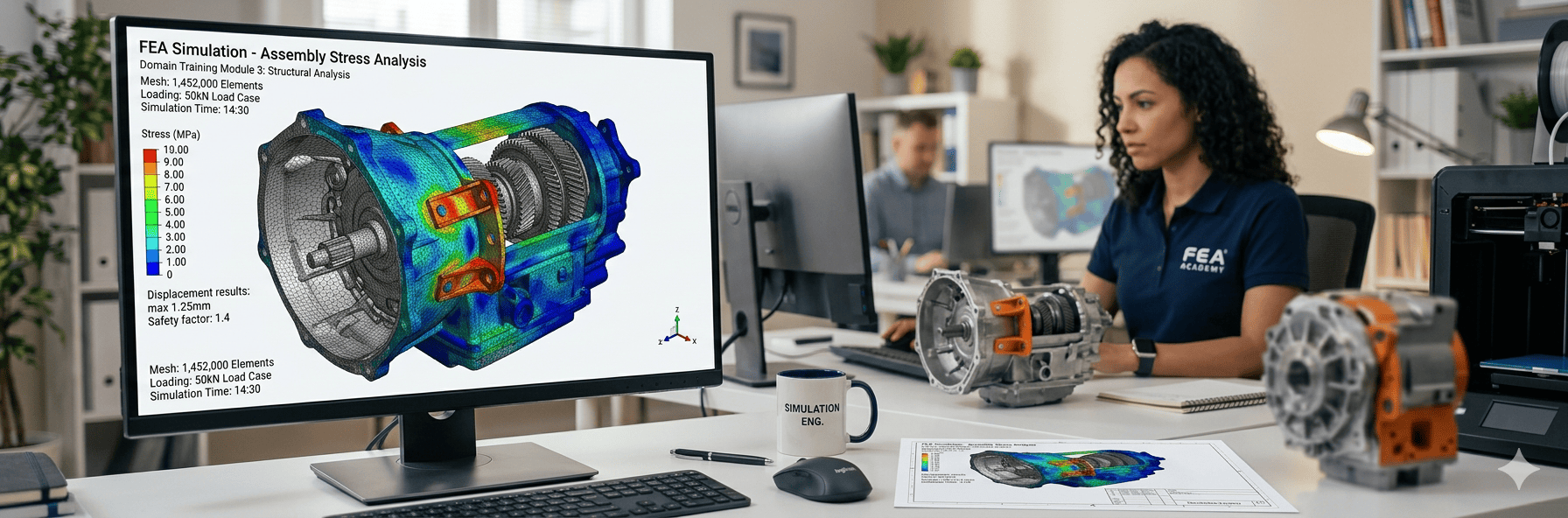
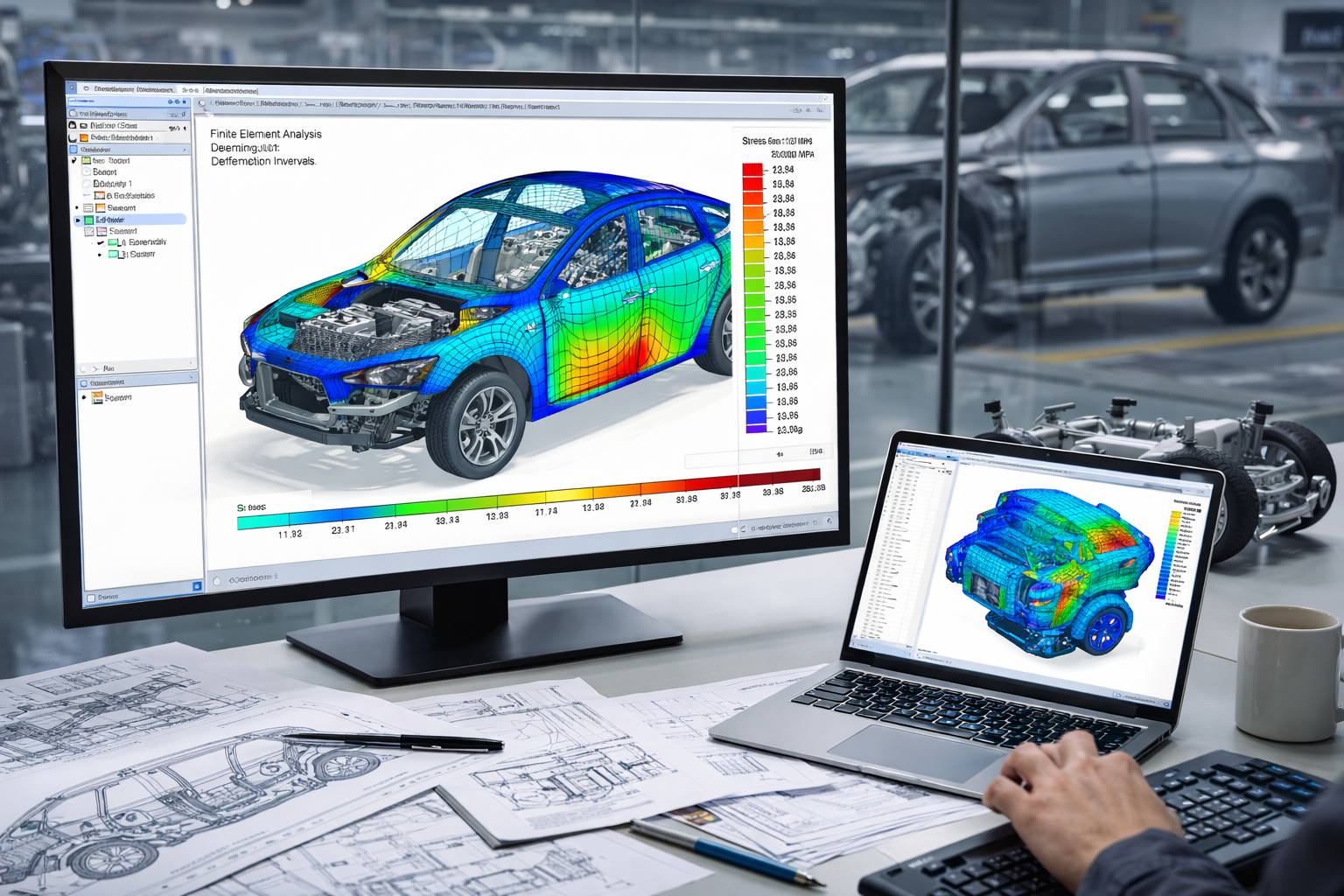
Finite Element Analysis (FEA) Course Training is an advanced engineering program that teaches how to analyze the strength, deformation, stress, and performance of mechanical components or structures using computer simulation before they are physically manufactured.

The training focuses on engineering simulation methods that help engineers predict how a product will behave under loads, pressure, vibration, temperature, or real operating conditions.

Month 1 : Engineering Drawing & Fundamentals
  • Technical Drawing Concepts
  • Engineering Standards & Conventions
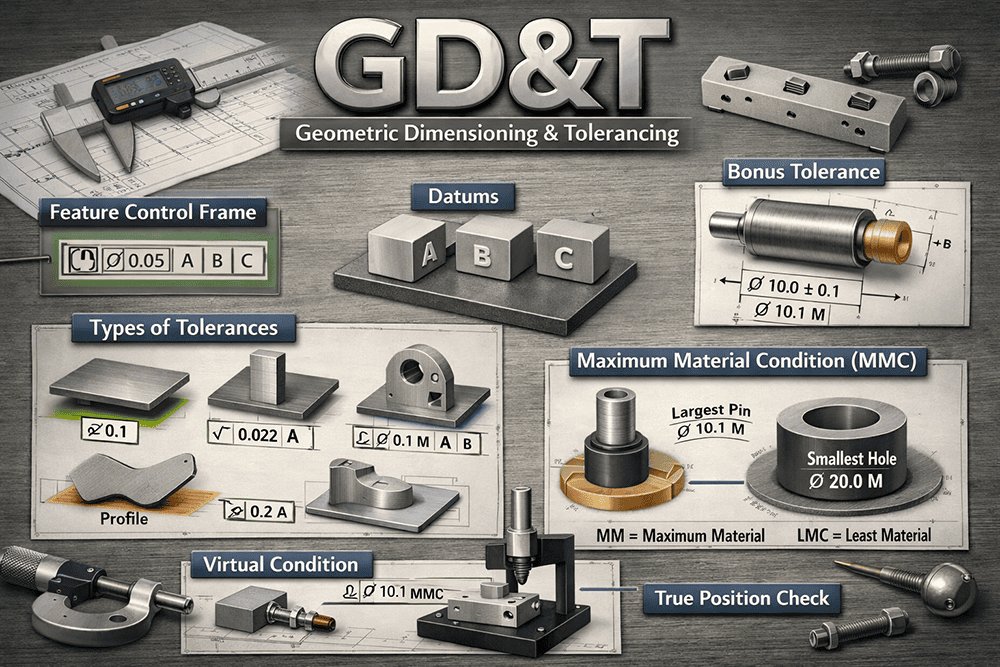
  • GD&T (Geometric Dimensioning & Tolerancing) Basics
  • Manufacturing Symbols & Interpretation
  • Reading & Creating Industrial Drawings
Month 3 : Software & Practical Training
  • 2D & 3D CAD Modeling
  • Assembly Design & Detailing
  • Real-Time Industry Projects
  • Design Validation & Optimization
  • Final Project & Portfolio Development

Objective of Finite Element Analysis Training

The main goal of this training is to teach engineers to:

  • Perform engineering simulations on mechanical components
  • Analyze stress, strain, and deformation
  • Improve product design and safety
  • Reduce product failure and manufacturing cost
  • Optimize designs before production

Engineers trained in this field usually work as CAE Engineers or Simulation Engineers.
What is Finite Element Analysis

Industries That Use FEA

Finite Element Analysis is widely used in industries such as:

  • Automotive
  • Aerospace
  • Heavy machinery
  • Oil & gas equipment
  • Consumer product design
  • Industrial equipment manufacturing

For example, automotive companies like Toyota and Tesla use simulation extensively to test vehicle components.

Topics Covered in FEA Training

Engineering Fundamentals

Students learn:

  • Mechanics of materials
  • Stress and strain theory
  • Boundary conditions
  • Load types
  • Failure criteria
FEA Process

The complete simulation workflow includes:

  1. Geometry preparation
  2. Meshing
  3. Material assignment
  4. Boundary conditions
  5. Load application
  6. Solver analysis
  7. Result interpretation

Types of Analysis Covered

CAE Software Used in Training

Students typically learn simulation tools such as:

  • ZW3D

These tools help engineers simulate real-world conditions on digital models.

Industrial Projects in Training

Students work on practical simulation projects such as:

  • Bracket stress analysis
  • Pressure vessel analysis
  • Automotive component simulation
  • Machine frame deformation analysis
  • Heat transfer analysis of components

These projects help develop real-world CAE problem-solving skills.

Career Opportunities After FEA Training

After completing the course, students can work as:

  • CAE Engineer
  • FEA Analyst
  • Simulation Engineer
  • Structural Analysis Engineer
  • Product Validation Engineer

Industries include:

  • Automotive OEMs
  • Aerospace companies
  • Product design companies
  • Heavy equipment manufacturers
  • R&D engineering organizations

Why FEA Training is Important

Finite Element Analysis helps companies:

  • Reduce physical prototype cost
  • Improve product reliability
  • Optimize material usage
  • Accelerate product development

Because of this, CAE engineers are highly valued in modern engineering design industries.

Enroll
Now

2026 SNAPDRAAW TECHNOLOGIES. All Right Reserved. Designed & Developed by Web Design and Digital Marketing Company in Chennai |Innov Touch Technologies Pvt Ltd | Web Design 
								and Digital Marketing Company in Chennai Innov Touch Technologies Pvt Ltd.