Find a Job
Master Finite Element Analysis (FEA)

Master Finite Element Analysis (FEA)

Overview

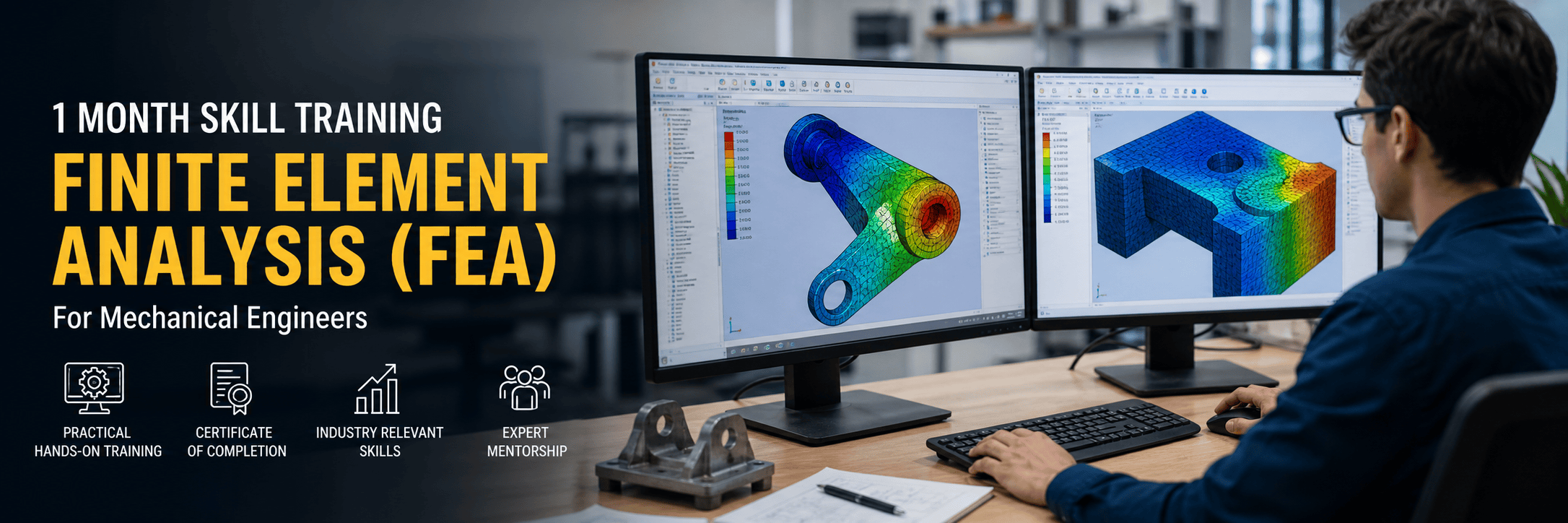
Master Finite Element Analysis (FEA) is an advanced simulation program designed to train students in engineering analysis, validation, and performance optimization of mechanical components.

This course moves beyond basic simulation and develops the ability to predict real-world behavior of products under various conditions—a critical requirement in modern design and R&D environments.

Core Modules

Fundamentals of FEA
  • Introduction to Finite Element Analysis (FEA)
  • Discretization (nodes & elements)
  • Types of elements (1D, 2D, 3D)
  • Degrees of freedom (DOF)
  • Governing equations & solution methods

Outcome: Strong theoretical base to understand how simulation actually works

Pre-Processing (Model Setup)
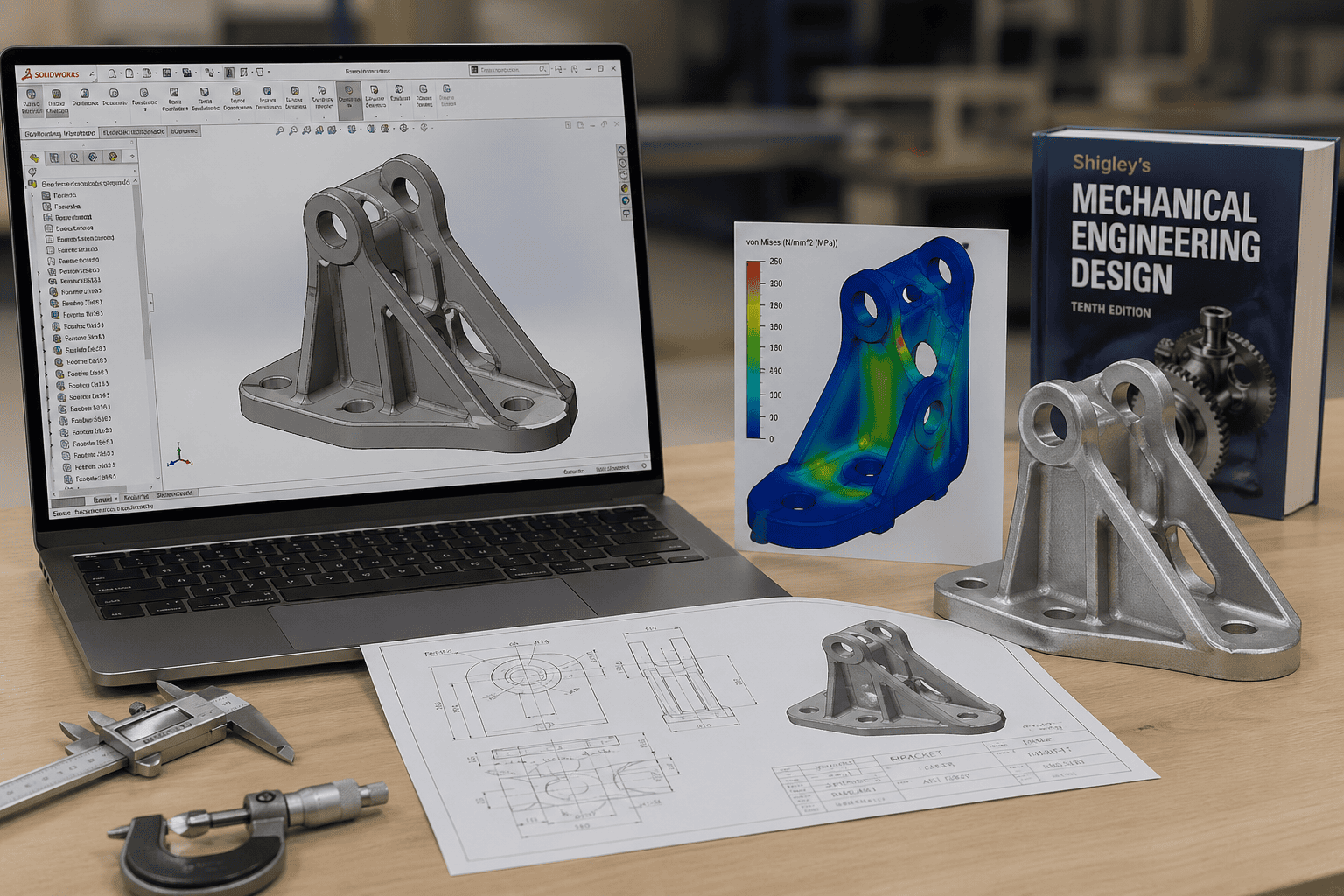
  • Geometry import & clean-up
  • Idealization techniques (mid-surface, simplification)
  • Meshing strategies:
    • Structured vs unstructured mesh
    • Mesh refinement & quality checks
  • Material property definition
  • Contact definitions

Outcome: Ability to create accurate and efficient simulation models

Analysis Types (Core Engineering Applications)

Structural Analysis

  • Static structural (stress, strain, deformation)
  • Nonlinear basics (contact, material nonlinearity)

Thermal Analysis

  • Steady-state & transient heat transfer

Dynamic Analysis

  • Modal (natural frequency)
  • Harmonic response basics

Fatigue Analysis

  • Life estimation (S-N approach)
  • Failure prediction

Outcome: Capability to handle multi-physics engineering problems

Post-Processing & Interpretation
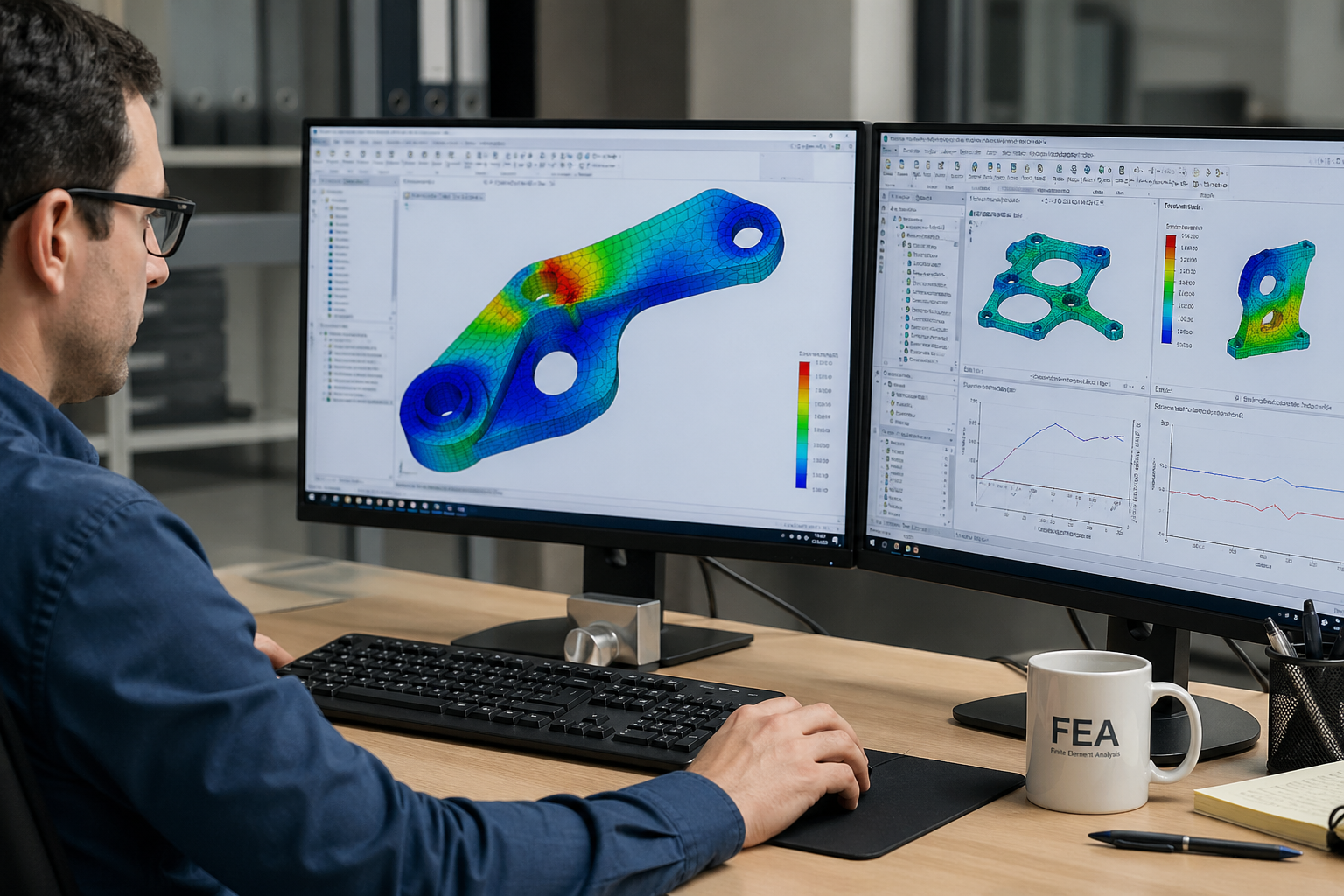
  • Stress results (von Mises, principal stress)
  • Factor of Safety (FOS)
  • Deformation & displacement analysis
  • Result validation techniques
  • Error identification & convergence checks

Outcome: Ability to interpret results correctly (most critical skill in FEA)

Design Validation & Optimization
  • Identifying failure zones
  • Reducing weight while maintaining strength
  • Material optimization
  • Design iteration based on simulation

Moves students from analyst → decision-making engineer

Industry-Oriented Workflow
  • CAD → Pre-processing → Solver → Post-processing
  • Case studies (automotive brackets, frames, pressure components)
  • Report generation (industry-standard format)
Projects & Practical Exposure
  • Static analysis project
  • Thermal or modal analysis project
  • Fatigue analysis case
  • Final integrated project with report

Learning Progression

Beginner

  • Basic theory & simple simulations

Intermediate

  • Multi-load cases & meshing techniques

Advanced

  • Nonlinear problems & design optimization
  • Industry-level project execution

Career Outcomes

After completion, students can work as:

  • CAE Engineer
  • FEA Analyst
  • Simulation Engineer
  • R&D Engineer
  • Design Validation Engineer

Why This Course is High Value

High-demand skill in automotive, aerospace, heavy engineering
Reduces physical prototyping cost in industries
Strong entry into R&D and core engineering roles
Higher salary potential compared to basic design roles

Enroll
Now

2026 SNAPDRAAW TECHNOLOGIES. All Right Reserved. Designed & Developed by Web Design and Digital Marketing Company in Chennai |Innov Touch Technologies Pvt Ltd | Web Design 

								and Digital Marketing Company in Chennai Innov Touch Technologies Pvt Ltd.